Tension Instrument
Lihan Jin
Architecture · 2020
NYADW 2026 — Traces of Force
Gallery 456 · Aug 7–21
Acquisition
Available for Commission — Inquire
Project Statement
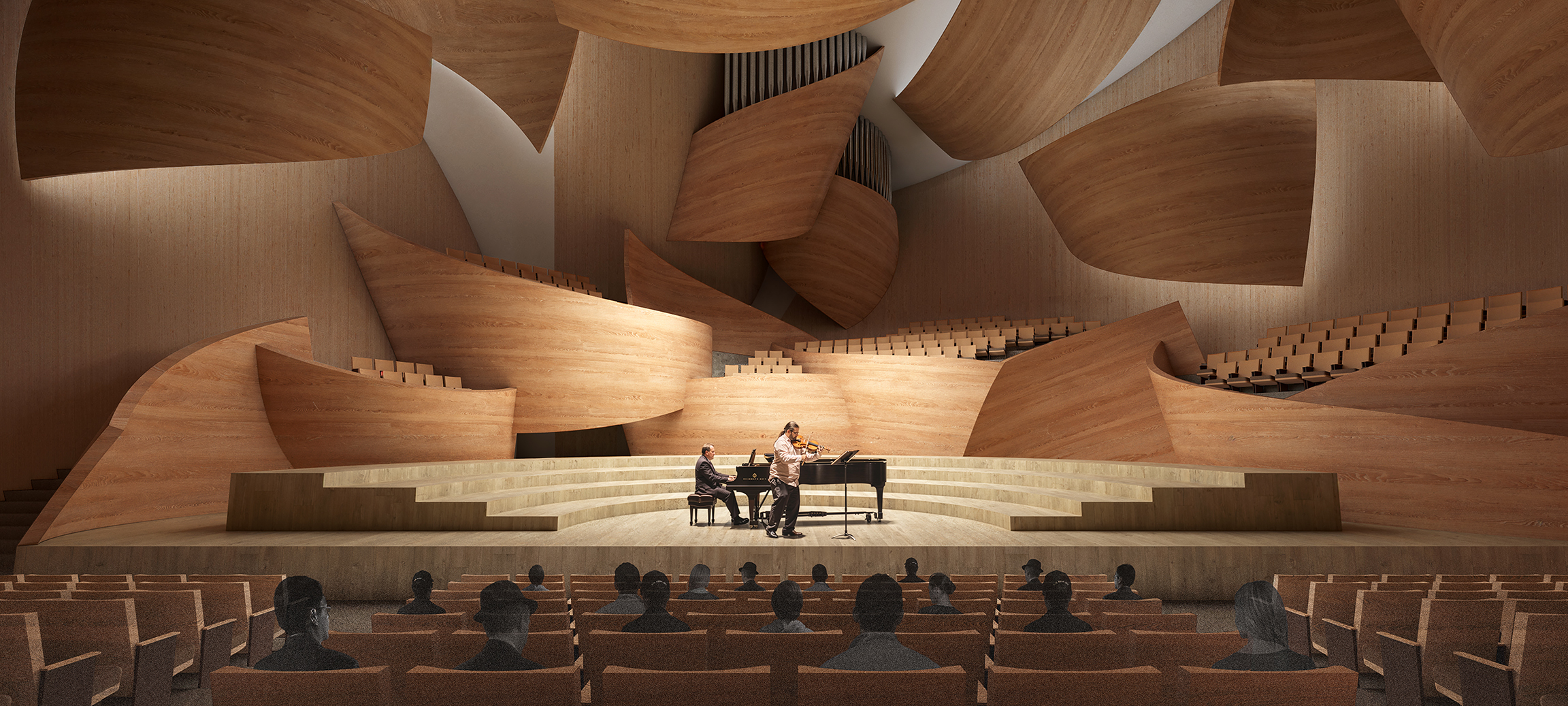
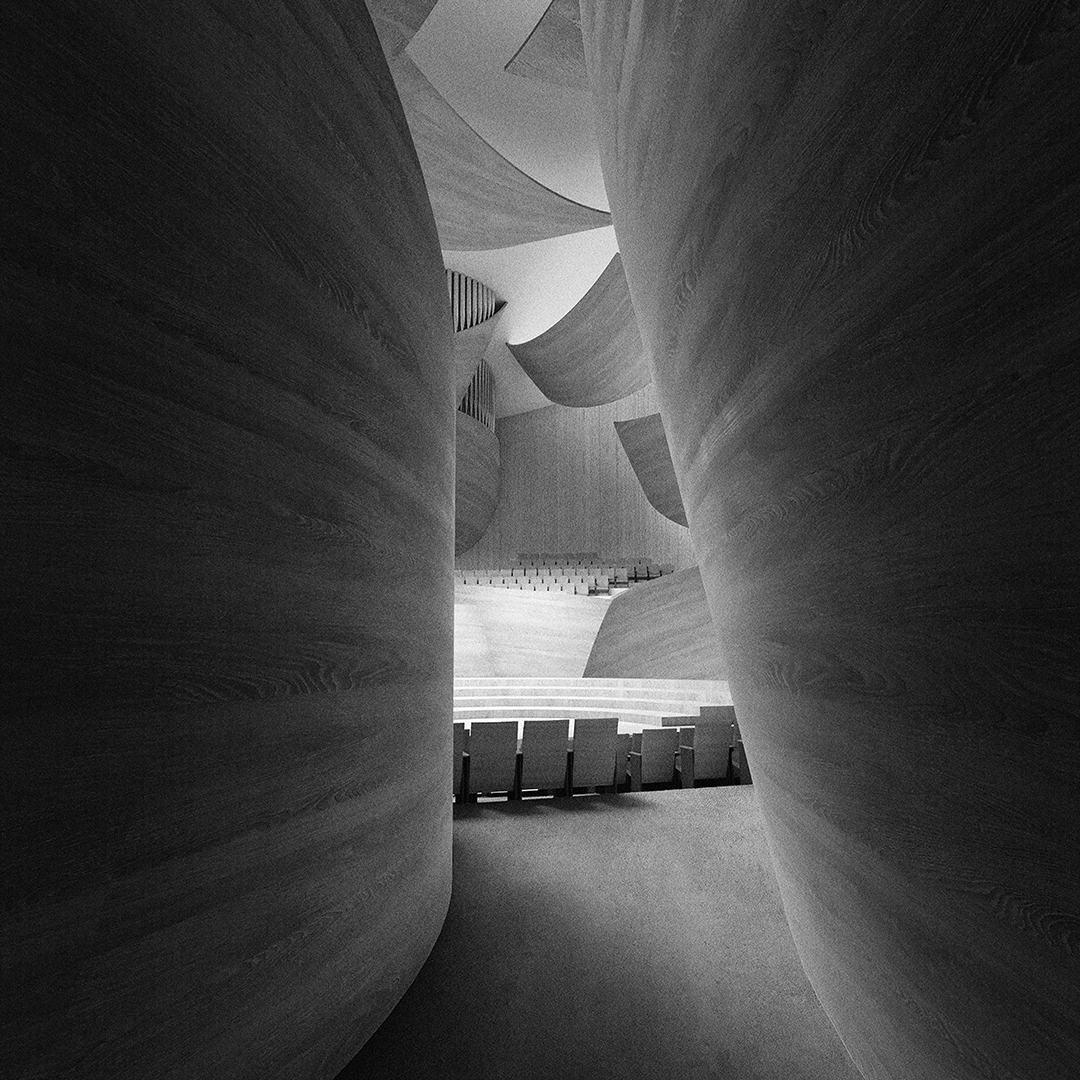
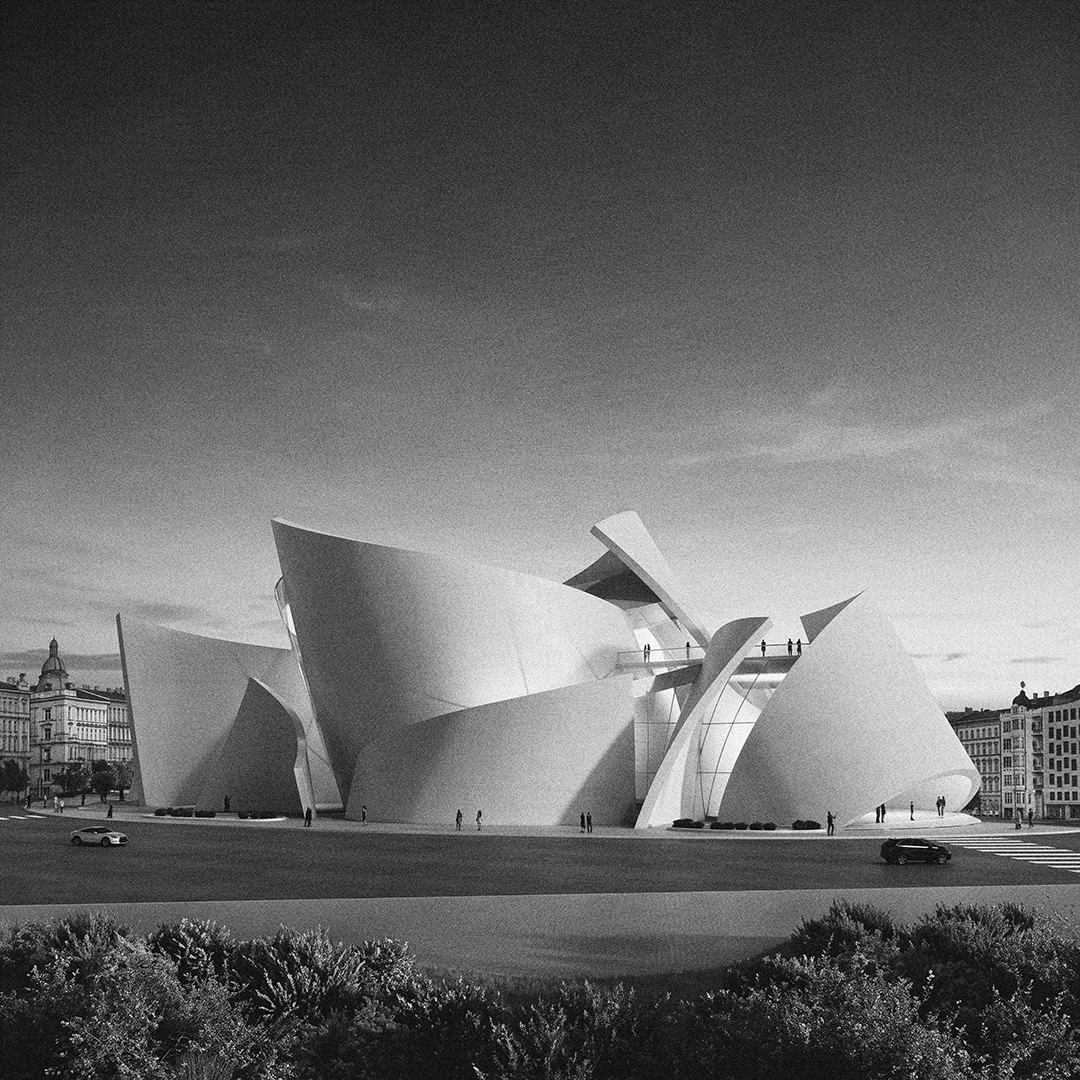
Tension Instrument explores the profound interplay between architecture and music, delving into how the intangible essence of sound can be translated into a tangible architectural experience. The design draws inspiration from the concept of "tension"—a dynamic force intrinsic to both disciplines—serving as the bridge that unites sound and structure.
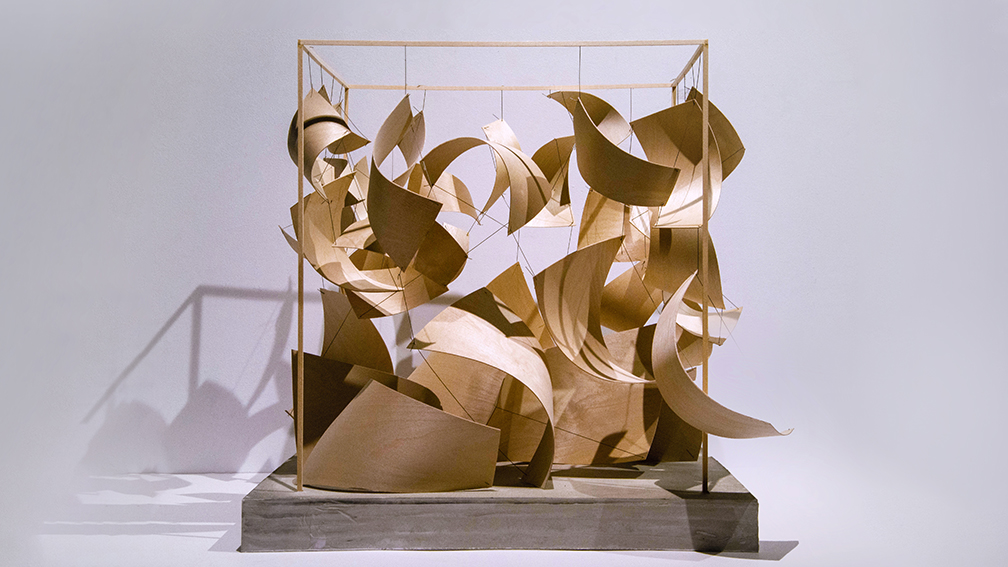
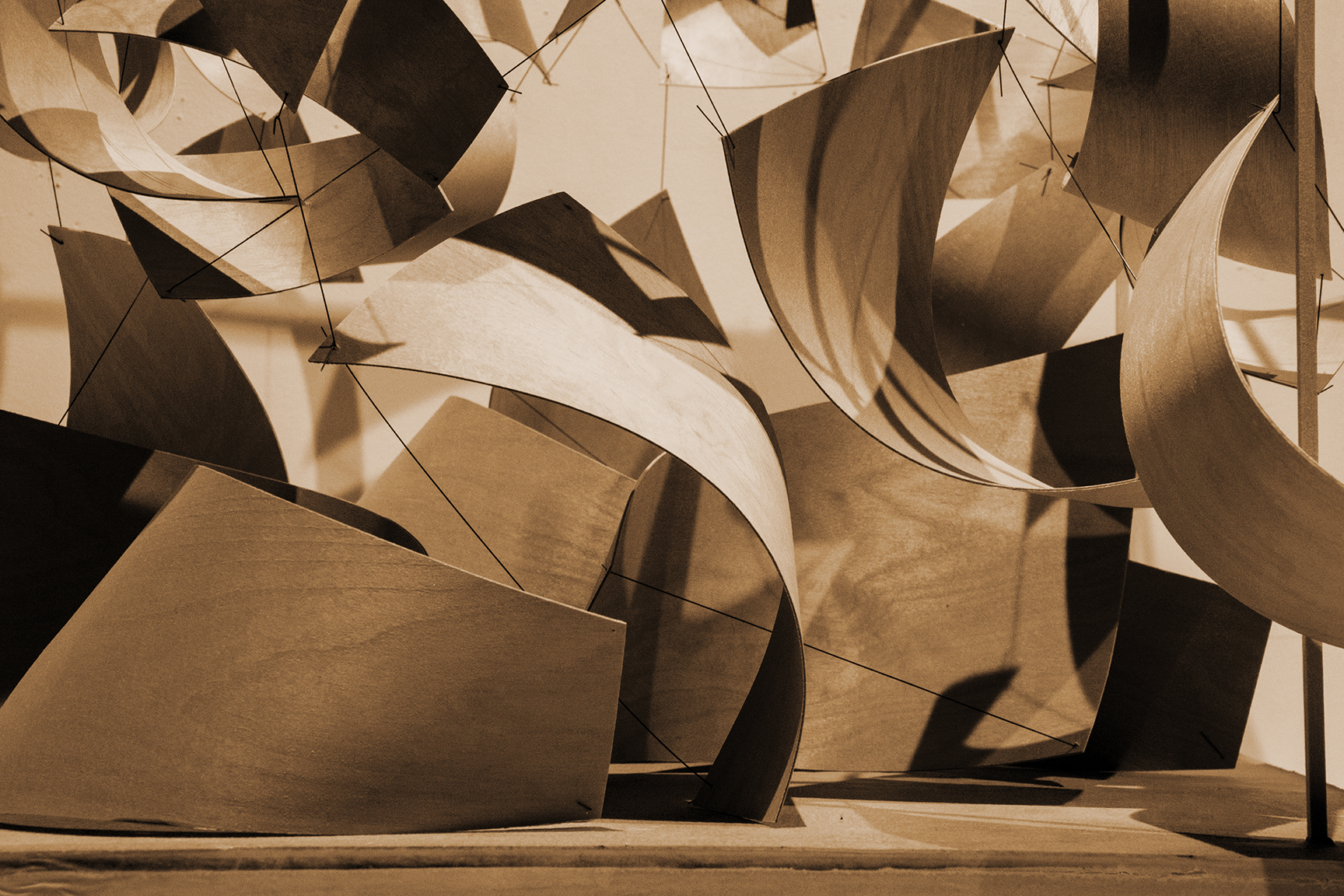
The architectural prototype is a piece of wood bent by a taut metal string, embodying the tension that harmonizes opposites. This simple yet evocative gesture evolves into an orchestration of architectural elements, including walls, balconies, and acoustic panels. Each architectural element originates from the core prototype, adapting its scale and tectonics to compose a harmonious spatial symphony.
Architectural tectonics and technology are the project's most significant challenges. The cantilevered curved walls, a defining feature of the design, were achieved through an innovative combination of steel and cross-laminated timber (CLT). This meticulous integration not only provides structural stability but also imbues the space with warmth and resonance, enhancing the sensory connection between the audience and the performance.
Gallery
Lihan Jin is a New York–based architectural designer and the founder of Studio Lihan, an independent design practice exploring the intersection of cultural heritage, material experimentation, and contemporary innovation. He holds a Master of Architecture from Columbia University GSAPP and a Bachelor of Engineering in Landscape Architecture from the South China University of Technology. Alongside his independent practice, he has worked at Kohn Pedersen Fox Associates (KPF), contributing to large-scale architectural and urban projects across concept design, design development, and technical coordination. His experience includes the North Bund Center in Shanghai, Singapore Changi Airport Terminal 5, and major mixed-use developments throughout Asia. Before joining KPF in New York, he gained professional experience at Renzo Piano Building Workshop in Paris and Trace Architecture Office in Beijing, developing a cross-cultural perspective spanning architecture, landscape, material, and urban design.
Lihan's independent work has received international recognition across architecture, art, and design. His concert hall project, Tension Instrument, investigates the interaction of wood and metal, transforming structural tension and acoustic forces into spatial form. The project received the MUSE Design Platinum Award, French Design Platinum Award, A' Design Golden Award, New York Architectural Design Gold Award, and finalist recognition in the Architizer A+Awards. In Islamic Distiller, he developed a modular mosque system that integrates solar water distillation into its architectural structure, earning an A' Design Bronze Award. His gallery project, Twisted Intertwining, explores the ductility and torsional behavior of metal as both a fabrication process and an organizing principle for space, and received a Special Mention in the Architizer A+Awards.
Lihan approaches architecture as the material record of forces—structural, environmental, cultural, and human—that shape the built environment. Rather than treating form as a fixed visual outcome, he understands it as the consequence of tension, resistance, transformation, and use. Through the intersection of advanced design methods and hands-on material experimentation, his work seeks to create spaces that are technically inventive, culturally resonant, and capable of revealing new relationships between people, matter, and place.
Opening Reception
Friday, August 7, 2026
6:00–9:00 PM — Gallery 456
Free and open to all. Join us to experience Traces of Force in person.
RSVP for the OpeningThis project is made possible in part with funds from Creative Engagement, a regrant program supported by the New York City Department of Cultural Affairs in partnership with the City Council, and the New York State Council on the Arts with the support of the Office of the Governor and the New York State Legislature, and administered by the Lower Manhattan Cultural Council.